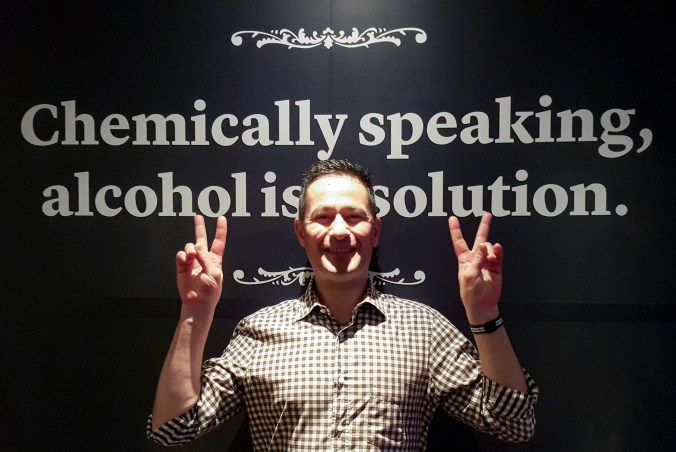
Following an evening of alcoholic overindulgence, I found myself in a conference auditorium with 200 colleagues one horrible, horrible morning in Beijing in 2015. Sporting a top-class hangover of ‘bravo, idiot’ proportions, I knew I had a tough day ahead of me.
The course I was attending was aimed at experienced technologists in a field I had zero knowledge of.
MANDATORY(!) pre-work for this course, involved creating an executive whiteboard pitch and presentation.
Considering myself somewhat the ‘creative’ (wanker Aquarian), I invested time and effort in creating what I decided was a stunning presentation. Being a bit lazy, I didn’t bother to learn about the actual topic.
I did, however, rehearse the delivery of the presentation 5 times before submitting my work to the education coordinator, well in advance of travel to China. I practised the key messages and ‘flow’ of my talk which I knew I would not have to present. Nice one Marco.
Anyway, spectacularly hungover and struggling to remain awake after 3 hours of lectures, I decided I needed to get up and visit the toilet. I just needed a 5 minute break.
Returning to the auditorium, the (unnecessarily loud) room’s speaker system blurted – “Ah, and here he is now!! Please come up to the stage Marco.
“I beg your pardon”, I begged, hoping for a pardon.
“After reviewing all the pre-work submissions, the management team chose yours as the blah-blah-blah…. And we invite you to present yours to everyone”.
I died.
Thinking on my sweaty feet, I replied, “Oh, really? Wow. What a surprise!
Unfortunately, I don’t have a copy of my presentation”.
“That’s ok Marco, I have a printout of it here”.
Crap. I was shitting myself.
My efforts in front of 200 people that morning in Beijing were far from being worthy of a speaker slot at a TED event. However it was good enough to result in a job offer from our Singapore branch the following evening.
So, how did I get through this situation?
I believe in a few core techniques to help almost anyone overcome manage fear when addressing an audience – small or large.
1. First, know your material. At least a little. Preferably in-depth.
In this case, I did not. However, I practised the little I did know.
As with most skills in life; the more we practice, the more confident and competent we inevitably become. Practice alone then practice with someone else.
2. Find a friend. As you present, scan the audience and find a ‘friend’ or two. Scan the audience as you speak so you engage with and ‘read’ faces in the crowd. You will inevitably make eye contact with someone who nods their head and smiles as you speak.
This person is priceless.
They may be thinking about that awesome week in Vegas. However, their unspoken words of encouragement will gift you with confidence. Someone is listening.
3. Control pace and breathing. We stress, we speak rapidly and forget to breathe. It happens.
Try listening to yourself as you speak. Are you speaking too fast or loud? Are you pronouncing your words clearly? How often can you hear yourself saying ‘um’ or ‘ah’?
This helps to ‘pull back’ and regulate volume, pitch, pace and breathing.
Breathing discipline creates time to think, gauge the reactions of the audience and make adjustments.
Sometimes saying absolutely nothing – for a brief moment – can be incredibly powerful.
It is a great way to increase the impact of the last thing you said. But don’t go all out ‘Hollywood’. Being genuine and true to your individual style is what really matters.
This skill is easy to practice and experiment with. Recording yourself while rehearsing your presentation is a great way to become both embarrassed and further better. Due to COVID-19, your next presentation will probably be delivered remotely, so practice with the crappiest tech you own, assuming you will have better on the day.
4. Screw slides. Inevitably, the audience both expects and fears PowerPoint. They expect our slides to be too numerous and detailed.
The most powerful presentation I ever sat through was delivered by a guy from Microsoft many years ago. His slides included minimal text but instead, powerful imagery as the backdrop to what he was discussing. Clearly, he practised his delivery many times, knew his material very well and really captivated the audience.
For this presentation, his words were the value. The gold. As it should be.
PowerPoint slides have a very short lifespan. The impression and value we leave with the audience are what matters most.
A deck of fewer than 10 slides (aim for 6) stands a better chance of creating a memorable experience for an audience.
In summary, I believe what makes a great presentation involves;
- Practice, practice, practice
- Read the audience and find a friend
- Control pace and breathing
- Use slides as an aide, not as the ultimate purpose of the presentation
- Avoid excessive drinking the night before you present and get plenty of rest.
I would love to hear about your challenging (and funny) presentation experiences and tips on how to become a great drunken presenter.
Cheers,
Marco
 Marco's Garage