Karate lessons.

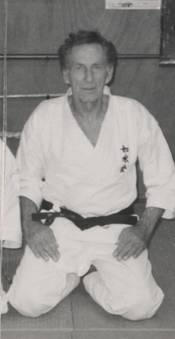
Wado Ryu karate was first introduced to Australia by Sensei Wally Maclean in 1967.  Sensei Maclean, an accomplished Judo practitioner operating a Judo school for fifteen years, decided to learn Karate. Why not, at the age of fifty-one?
He commenced his study of karate and in 1966, Sensei Maclean travelled to Japan where he was introduced to one of the leading instructors of the Wado-Ryu style, Sensei Kazuo Sakai.wallymc1

Sensei Maclean commenced his study of Wado-Ryu at Sensei Sakai’s dojo in Yokohama where he received his Shodan grading. On his return to Melbourne, Sensei Maclean commenced teaching Wado-Ryu Karate in Box Hill in the state of Victoria, Australia. After bringing the Wado style to Australia, Sensei Maclean returned to Japan many times and encouraged his senior students to do likewise. He constantly tried to improve the standard within his dojos and to adhere as close as possible to the correct method of practice and instruction as intended by the Grand Master Hironori Ohtsuka.

I commenced my studies under Sensei Maclean as a teenager.  Wally’s two-hour classes were intense.  Countless pushups and sit-ups, excruciating stretching, hundreds of punches, kicks and throws.  Wally’s classes also included periods of meditation and reflection, where he taught his students the importance of mental and spiritual fortification and discipline.

Sensei Maclean would have been in his late-60’s, possibly early 70’s at the time and my most powerful memory of this ‘old man’ involves a single strike to the chest.
My chest.  Delivered by Sensei Maclean.
At that moment, Sensei Maclean’s movements appeared slow yet measured to me.  Deceptively slow, right up to the point his boulder of a fist made contact with my body.

WMc.png

Instantly, I came to understand what decades of martial arts training and experience result in.  A deep understanding and high level of competence in the art/profession and a big punch.
Today, we might label Wally an ‘expert’ in his field.

Though I considered myself a capable practitioner of Karate at the time, I came to the realisation that, compared to Wally, I was still a white belt – with so much more to learn.  And Wally, the ‘expert’ would help me on my journey towards improving myself.  Without someone like Wally, I might never be able to become the best I could be.

To this day, Wally’s teachings shape the way I carry out my life.  I value tradition, culture, respect for others and physical wellbeing.  No matter how much business and life experience or education I accumulate, I consider myself a white belt of life.  There is always more to learn.  Excellence to continue to strive for.

Sensei Maclean passed away on the 7th of September 2003.  If 2003’s culture was similar  to that of 2018, Wally would have been considered unemployable during the years leading up to his death.  An unfortunate victim of a workforce reduction strategy.

Why? The guy was ‘old’. Younger, probably cheaper teachers could surely take his place. Do the same job. Just as effectively as Wally. Right?

However, in business and in life, who would you rather be taught by, led by and influenced by?  Wally, or a less experienced and learned alternative?

When we cast aside the Sensai’s of this world from the workforce prematurely, we lose more than decades of accumulated knowledge. We also help ensure becoming a master is something many of our young blood, with their enthusiasm, creativity and modern perspective are robbed of.

Consider the consequences of that.

In my opinion, we all should strive to be white belts.  Forever looking forward to learning more.  And when the time comes, hopefully helping the next generation achieve great things.

Would you wish to be the one electing to send Wally to pasture prematurely?

Footnote; I recently joined a karate school after an absence of a few decades (with my eight-year-old son).  My journey begins once more.  It feels great being a white belt again.

White Belt.jpg#leadership #knowledge #workforce

Did I ever tell you you’re my hero?


IBM Redbooks, developed and published by IBM are technical publications defining best practices for installing and using IBM products – written by clever clogs.

A new Redbook was released recently, covering the click bait feature of IBM’s latest mainframe (the z14.  Like you didn’t know) – Pervasive Encryption.

Pervasive Encryption is a comforting innovation for anyone feeling their privacy, personal information or money, to be somewhat crown jewel like in nature.

To quote IBM (stay with me for the next 90-ish words please, friends) – “At the core of every enterprise are business assets which if lost or compromised could cause irreparable damage. Core business data may be governed by regulatory requirements designed to protect data and safeguard privacy, with high penalties in the event of loss. Internal and external pressures to protect customer data have changed the perspective around how core business data should be handled.

IBM’s pervasive encryption is a consumable approach to enable extensive encryption of data in-flight and at-rest to substantially simplify encryption and reduce costs associated with protecting data and achieving compliance mandates.”.

In our world of GDPR, compliance and governance demands, advancements such as pervasive encryption are highly relevant.

Encrypting EVERYTHING may be desirable but in practice, is complex and expensive to achieve.  This is the challenge the z14 help address.

Anyway, I was talking about the latest IBM best seller Redbook.

Google ‘Getting Started with z/OS Data Set Encryption’ if you are interested in learning more and please, take a moment to review the ‘Authors’ section.

You will note the only non-IBMer in the list of contributors is Thomas Liu of The Australia and New Zealand Banking Corporation (ANZ Bank) from Melbourne, Australia – yes, that Melbourne.  The World’s Most Liveable City.

Thomas Liu is a senior ANZ system programmer and a respected member of the IBM Customer Council (comprised of less than a dozen IBM customers worldwide).  Thomas knows his stuff.

Capture

An invitation from IBM to a client to co-author an IBM Redbook represents a significant statement of recognition from IBM.  Someone knows their stuff.  It is also somewhat of an honour within the technical community.

One thing I must give IBM credit for is how they involve clients in the process of not only documenting and sharing expertise with the broader technical community but also to help shape developments and innovations for future product roadmaps.

This post is to say ‘Thanks’ to all the anonymous technologists out there.  You make a massive contribution.

In closing, I feel it important to mention Thomas does not seek or feel comfortable with public praise for his efforts.
So, to all of Thomas’ friends and colleagues, I suggest you share a link to this article with him.

Thank you, Thomas, and sorry mate.

#trustIBMZ #digitaltrust #ANZBank


This weblog does not represent the thoughts, intentions, plans or strategies of IBM Corporation. It is solely my opinion.

Rise of the (well marketed) Machines

I genuinely love technology.  Technology stimulates and entertains my mind.  The technology industry also assists me to feed my family, so I am reliant on the tech industry for my livelihood.

The new wave of artificial intelligence, cognitive, machine learning advances in technology, promise to create previously unforeseen advances in medicine, research, customer engagement, automation, entertainment and more.

I do acknowledge that an element of the ‘more’ may be somewhat unpalatable for many inhabitants of our planet.

As a business professional, father and (I like to believe) a rather decent person, I am somewhat perplexed by the ‘promise’ of AI, ML and cognitive ‘solutions’.  Simply put, may these make my existence redundant in this world?  Will humans create machines capable of building and maintaining genuine human relationships, with people?  Machines which can do what I do for a living far more effectively than I am able to.

It would come as a complete surprise to me to discover I am the only person considering such questions.

Are you wondering the same?  Experiencing the same concerns?

Fear not my friends: #mckinsey published a rather interesting ‘What the future of work will mean for jobs, skills, and wages’ article to educate and reassure us all.

If, however, it all turns to poop and we find ourselves relegated to the (non-financially compensated) role of ‘Breeding and Media Consumption Device’, rest assured the top 10% of earners on the planet will pull a ‘Bill Gates’-  donating their significant wealth and resources towards ending world poverty and ensuring a better life for all.

Am I right?

Until that moment arrives, does anyone need a cognitive machine learning solution with enhanced artificial intelligence?

I happen to have a great deal going on them at the moment – limited time only.

In yellow.

Bluetooth and (optional) Lane Departure Warning system included.

Welcome to 2018


To my family, friends, clients, colleagues and fellow professionals, I wish a healthy, joyful and successful 2018.

2017 was a year of bad news – Trump, hurricanes, mass-shootings, the repeal of net neutrality laws in the US and the ongoing insatiable appetite for highly profitable wars.

However, an Australian company produced a bee-friendly insecticide, coral gardening is helping to restore the Great Barrier Reef, vomiting fungi could help solve the global plastic problem and Muslim hackers united in an attempt to wipe ISIS from the internet.

For the first time in three years, I recently took a short break and went camping.  This campsite does not have cell phone reception, leaving me blissfully internet free throughout four days.20171230_120702.jpg

I flew a kite, went koala spotting, took some long walks, hit the trails on a mountain bike, experienced some wonderful driving roads in a red Alfa Romeo, drank a few beers around a campfire and after not shaving for four days, remembered why I shave every day (itchy).

Upon my return to the internet, I stumbled upon this article from #fastcompany.
This piece suggests how to become an essential member of a team, leading to greater job security.

One piece of advice I would like to add; look after yourself.  Try to find time for more of that all-important sleep, healthier food, regular exercise and taking breaks from your phone or PC.

These all help deal with our daily sources of stress and charge us with the energy required to work towards our goals.

20180101_203635.jpg

#newyear #balance #wellbeing

My day trip to a data centre

Something had been playing on my mind since I joined IBM a little over 2 years ago.  My job is to help my customers buy a combination of IBM software, hardware and services.  Some describe these as ‘solutions’, ‘innovations’ or ‘outcomes’.  I like to think of them as insurance.  We all need a sales angle (wink-smiley face) and right now, that is mine.

However, until recently, I had never actually seen the insurance I sell in operation in a customer’s environment.

So, last week, I asked a client if I could come and visit their datacentre.  He told me no other salesperson had ever requested that, leaving me thinking I had uncovered a point of differentiation (see one my previous posts).  A meeting request promptly hit my inbox.

5 days later, I watched through the windscreen of my 1971 Alfa Romeo coupe (which I took out for this special occasion) a very solid looking gate slowly sliding from right to left, allowing me to enter the facility and drive to a parking marked ‘Visitors’.

Eventually finding my way to the security reception building, I presented my IBM ID and driver’s licence, filled in many forms and read a 15-page induction document.  The security guard then asked, “Did you read it properly?”.  So, I read it again.

In time, my identity cards were returned (with the addition of a coloured label marked ‘Inducted’ and the date.  I was also issued with a visitor pass.

My client and host for the day led me through a labyrinth of doorways, hallways, suspended walkways and stairwells.  We were on our way to join a half dozen guys (client and IBM staff), who would be my tour guides.  I suspect they don’t get many people asking for a tour and were determined to make my visit memorable.  Spoiler – they absolutely succeeded.

Every few seconds, my customer would bark a command in my direction.
“You have to tap EVERY card reader.
This one you need to tap and enter this PIN.
Look at the camera up there and tap your card here.
You forgot to tap that one.
Why did you wear a suit?
You forgot to tap again”.

At one point during our hike, he gestured towards a head jamb above one set of doors which featured some very obvious physical damage.  Numerous deep scratches, chips and missing paint. He explained with an element of pride, “Every mainframe we every bought through here left its mark on this doorway”.

So far, this was turning out to be an entertaining new experience – and I had not yet seen a piece of hardware.

Please allow me to provide some context.  My first job after graduation was with Canon.  I was a photocopier engineer and I enjoyed that role for 10 years.  If you were someone who loved Meccano as a kid, being a copier tech in the 1990’s was amazing.  In this datacentre, I really wanted to see hardware, lights and things that go beep.  Hollywood style.

Four rooms, across two floors of data centre, were to be my treat this day.  I was shown diesel gulping industrial power generation installations and massive water supply and air-conditioning systems.  If (when) war breaks out, I know where I will be heading.

The client and IBM teams proudly led me past seemingly endless racks of hardware.  My attention was drawn to power cables as thick as my forearm and slim, elegant, fibre optic cables which as far as the throughput of data is concerned, punch well above their negligible weight.

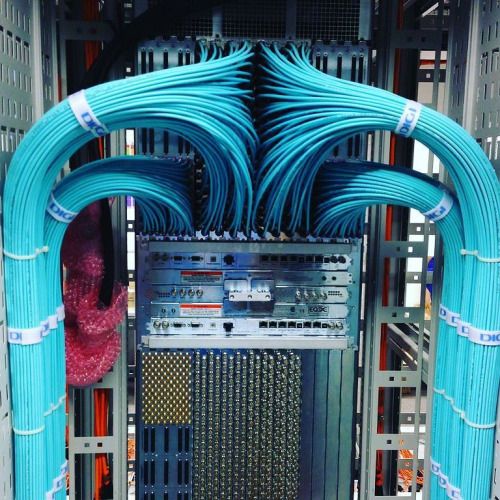
The amount of network cabling was completely mind-boggling.  No matter if out of sight 09c66771365defe96c31c65ff3451be7(underfloor) or in full view (overhead), all of it was fastidiously labeled and routed – by hand.  I have a new found understanding and respect for the people who practice this art.  I now understand why data centre cabling is so expensive.

One IBMer opened a the bizarrely sculptured doors of one mainframe and provided an explanation of it’s contents.  He described the various components and redundancy features of the Z System.  All I really noticed was how clean and uncluttered the ‘box’ was, considering the crucial role it plays within this computing environment.

Subsequently, I was shown the powerful beasts known as mid-range IBM Power systems, countless racks of x86 servers, massive data storage boxes, robotic tape backup systems (I saw one of these ‘move’, which I was told is a rare treat) and loads of other kit.

Ok, anyone who reads my posts will know I have a tendency for verbal diarrhea.  So, I will try to keep the following brief.

This client has millions of customers and the services they provide are primarily provided via the use of technology (and great customer service).  The heart of this client’s technology infrastructure is the IBM Z – the mainframe – Big Iron.  Accidentally kick the plug delivering power to the Z and there is no company.  Period.  Hundreds of millions of dollars of technology situated in this datacentre would become pointless without the mainframe.  Remove the heart and the body cannot function.

These IBM Z behemoths, processing billions of dollars’ worth of transactions per day, were doing their job while emitting nothing more than a pleasant warm breeze.  Less heat than some photocopiers I worked on all those years ago.

It was the lack of heat which stuck in my mind as the tour continued.

Every other type of server in this datacentre was generating significantly more heat, placing great demands on air-conditioning systems.  Yet, at the same time, the mainframes occupied a 100-fold lesser amount of floor space and required considerably fewer propeller heads (no offence intended) to maintain.

The mainframe (and mid-range IBM Power systems) were happily snuggled together.  Side-by-side like intimate lovers.  Other server racks were installed with a 50cm air-gap between each of them.  To me, that looked awful and seemed an inefficient use of floor space.
‘Why are those racks installed that way?’, I asked.  “To help with cooling”, my guide replied.

Imagine for a moment, how much energy is consumed just to keep a data centre cool.

Data-CentreI am not saying for a moment there is something wrong with non-IBM systems.  Far from it.  Almost everything I saw in that building was state-of-the-art.  As computers become increasingly powerful, heat management remains an ever-present challenge for engineers to overcome.

As I pondered my observations, the penny dropped – the heart of this business was not just exceptionally resilient and secure, but also rather nice for our environment.

The other thing I thought was ‘IBM’s marketing team needs a good kick in the arse, or an increased budget’.

There were hundreds of energy consuming servers in that building, providing key computing services, which run perfectly well on the mainframe.  I mean, on ONE mainframe! Especially those running on Linux.

Food for thought.

Thank you very much for reading and all the fish.

The views and opinions expressed in this article are solely those of the original author and other contributors. These views and opinions do not represent those of IBM (International Business Machines).

#technology #infrastructurematters #IBMZ

How Tidy is Your Garage?

IBM takes employee education seriously.

IBM insists we complete a minimum of 40 hours of professional training every year, including mandatory modules relating to ethics, compliance and IBM’s offerings (author consciously avoids using the word ‘solutions’). IBM also provides access to other professional training via 3 party providers.

If you do not complete your 40 hours of training – you are admonished. With pineapples. Thick, spiky pineapples.

This year, I have completed over 90 hours of training and received zero pineapples. I do not like pineapples.

IBM’s employee enablement website features a clever little tool built with IBM technology. This analytics application considers MY current role, career aspirations (according to what I tell it they are) and my IBM training history. Subsequently, a learning path is generated. Neat.

However, the software is incapable of developing a deep understanding of a person. The tool is unable to account for experience gained throughout a pre-IBM career or the influence of peers, clients and mentors. It is oblivious to personal values, ethics and self-confidence.

When it comes to assessing individual quirks and unique attributes; frankly, it is a bit of a thick head. As useful as a chocolate fireman. Consequently, it is not 100% effective at helping guide someone towards a bang-on custom learning path.

Don’t get me wrong. It is a good tool. It just doesn’t know how to read minds. This is, without doubt, a good thing.

A colleague asked me this question last week. ‘Can you recommend any good courses from our internal training site?’

‘Perhaps. It depends on how tidy your garage is.’, I replied.

Ok, I didn’t actually use those words, wishing to avoid sounding like (as we say in Australia) a complete wanker. Instead, I asked him about his background and career aspirations, hoping to use that information to make some sort of recommendation.

In my mind, I was definitely wondering what his personal professional garage looked like.

Professional garage?

Many of us are fortunate enough to own a garage, or other space to escape to and tinker.

Our precious tools live there. Tools are eternally awesome things. We can never have too many.

Say we don’t own something needed to tackle a specific job. What options are available to us? We may look to purchase or borrow what we need. Occasionally, we exercise creativity and conjure up a workaround, which always results in a magical moment of inner back-slapping (assuming the bodge was successful). Alternatively, we may elect to employ someone else to do the job. Saving us time, though often at significant cost.

To be as useful and efficient an environment as possible, garages requires a certain level of organisation. Categorising and organising possessions helps us form an understanding of how well equipped we are to tackle most jobs.

Some people take this to extreme levels. Considering not only functional but also aesthetic organisation. For example; ensuring all spanners are meticulously stored with heads facing the same way. Some may describe this as having great attention to detail. Others may describe this as a sickness (or having waaay too much time on your hands).

Likewise, we all have professional ‘mental garages’, filled with an ensemble of tools, materials, and crap. Do we organise the stuff occupying the space between our ears to help us become better, happier and more confident? Or do we just toss what we possess in a pile and hope to find what we need later?

We live in an information intensive world which has high expectations and demands. Do very much more with considerably less. Remaining organised has become increasingly challenging, in spite of (or due to) the electronic tools we have at our disposal.

I don’t know about you, but, occasionally, I find myself with way too much information to manage within the confines of my little brain. Sometimes, it feels like I am holding a water-filled balloon in my hands while trying to maintain its cliché, balloon-like shape. Predictably, things tend to become somewhat wobbly.

Exercise, hobbies and vacations do help to clear the mind of this ‘white noise’. However, I believe we can all benefit from an occasional mental stocktake to tidy up our inner garage and feel more in control.

What might be some of the benefits of this? Improved focus, motivation, professional competency, happiness and career progression.

The PPG – Personal Professional Garage

The assets we keep in our PPG can be difficult to quantify, let alone take advantage of. Especially when our heads are filled with email, YouTube, email, Facebook, WhatsApp, email, Instagram and email.

In my opinion, our core assets include, in no particular order:

Education. The collection of instructions, how-to guides, manuals, magazines and scribblings sitting on dusty shelves in the garage.

A ‘Garage Zen Master’ knows how to RTFM (Google it) and takes on knowledge.

Education comes in many forms. Our, experienced friends, colleagues and mentors are great educators, having ‘been there’ before us. Listening to their stories and advice helps short track an education.

At the same time, we can learn from the nasty, vicious, brown vinyl people who come into our lives as understanding what not to do as a professional is equally important.

Think of this as others screwing-up, so we don’t need to.

LinkedIn can be a great tool; allowing us to connect, follow and participate in community conversations. Following influencers, joining community groups and keeping abreast of what clients and competitors are saying is a great way to learn and identify current and future trends. For the record, I have no affiliation with LinkedIn, though do accept direct deposits and PayPal. Cash is also nice.

There are countless online resources, conferences, industry publications and of course, the offerings of thousands of educational institutions.

Schools provide us with that invaluable certificate which is a wonderful thing. This is why everybody has one. They are a ticket to the dance.

However, to be a dance master requires hard work, loads of practice and some advice from Roger Swiper – Tango Master. Do you know a Roger? Find a Roger. He works on level 22 of my office.

Experience. The shiniest, most powerful tool in the garage.

All of us gather experience throughout life. No matter if we do something correctly or completely cock it up, we always gain valuable experience.

What if someone happens to be new to the workforce? How would they gain experience rapidly?

I would recommend tapping into the minds of subject matter experts, analysts, managers and (again) mentors. Especially (if possible) through a conversation (try reaching out via LinkedIn). When we show genuine interest in someone and ask questions, most people will open up and gladly share their experiences and learnings.

As will old people. Try asking an old person a question should you seek to fast-track a journey towards Garage Zen Master status. The ‘Wise One’ in every story told is always the oldest person in the room. There is a reason for that.

Listening to old people is cheating. I encourage everyone to cheat. Often and with vigour.

Values. Transform a garage into a temple.

Those of us raised by great parents were blessed. Our folks instilled within us, an understanding of the importance of acquiring and demonstrating strong values. Honesty, integrity, manners and empathy.

In my opinion, most people would accept that values are nothing more than common social sense. They are a set of basic instructions for the game of life.

A professional life undertaken devoid of ethical standards serves no purpose beyond occasional monetary gain or even a promotion. Some people may consider that success. Personally, I don’t wish to be remembered as ‘That awful girl/guy with a garage full of expensive toys but no real friends’?

Values help define who we are and our reputation. Reputations stick.

Uniqueness. The special sauce which sets one garage apart from most others.

A delicious cocktail of knowledge, creativity, abilities and resources concocted over time. Small details setting us apart from competitors and peers. Details which others are perhaps unwilling, unable or possibly too ‘busy’ or lazy to focus on.

Try to work out what it is that makes you unique. It isn’t as easy as it sounds. Ask friends, colleagues and customers if there is something you do which other people they work with do not. I am sure they will help with unseen insights.

If they cannot think of anything, ask about suggested behaviours you might adopt, which others don’t. A great source of ideas to help you differentiate.

I attended a sales skills seminar some years ago. The presenter offered a tip to the 100 salespeople (I know – a horrible thing to imagine) in the audience. He suggested we follow up each client meeting by authoring and distributing quality meeting notes to all attendees. Documenting points of discussion, action items with agreed due dates, etc. The presenter suggested most sales professionals do not do this. So, by doing so, we had an opportunity to differentiate ourselves from our peers.

Stupid meeting notes. Too simple a concept to represent any real value, right?

He also pointed out that of the 100 people in the room that day, perhaps 1 or 2 of us would follow his advice. He was right. I did and I can tell you, he was right. Customers do actually appreciate that (not so) stupid element of value-add.

It is great to be known for the unique things we do for others.

Junk. Every garage contains junk?

Our junk may include a collection of fears, negative experiences, bad habits, a lack of training or poor guidance.

When considering junk; think if any of the following might occur if we ignored it. Assume we stopped worrying (or worried less) about our problems.

Would the World stop turning? Would anyone die?

Imagine if we thought less about the college degree we lack, our underdeveloped professional network or of skills we lack. If truly important, these and most other challenges can be overcome if we plan to do so. A good, honest mentor can help with this. Providing a sanity check, advice and support.

Think of the Big Rock – Little Rock analogy and try to focus on truly important issues (big rocks). Then, time permitting, work on the less significant stuff (little rocks).

A 2007 article from Zen Habits included some handy tips for applying the big rock – little rock methodology to one common source of worry for thousands of people around the world – managing our daily workload. If interested, please click to go to the article here.

I honestly believe most people are capable of reducing the volume and significance of any junk pile. Perhaps not overnight. But it will happen.

As a manager once told me; “Life is full of crap. So why waste time worrying about crap?” He always had a smile on his face.

Time to organise our professional garage.

So, by now, we have considered the contents of our professional garage. Now we move on to documenting them, keeping it simple.

Personally, I like to start by listing my assets in their respective categories – EducationExperienceValuesUniqueness and Junk.

Yes, even our Junk is an asset. The big rocks of junk represent an opportunity to understand that little rocks are about as significant as a grain of sand. Not worth worrying about. The value comes from burden reduction and improved clarity/focus.

In fact, I suggest using a pencil to record your junk. So much easier to erase later.

Now is the time to add our assets to each category – certifications, personal characteristics, special sauces, challenges, etc.

Celebrate these and understand their value and significance.

Now select a different coloured pen and consider what is missing from your garage.

What are the 1 or 2 things which could help improve each category? Seeking additional training, working on a killer LinkedIn profile, helping a charity, some physical or mental exercise or working on differentiation and value.

I try to consider a couple of things during this phase. What could help me become better in my current role? I place a little ‘P’ for Progress against these.

Then I consider my aspirations for the next role and the 1 or 2 things I could do to move towards making that a reality. Drawing future dreams closer, step by step.

I mark these with an ‘I’ for Investment.

Next, I try to identify what I will do over the next 6-12 months to progress via investment in myself and my future. I may not have answers for all at first, but I will do for some of them. Good enough for now. A simple plan for working on moving the needle in a positive direction.

I record them in my calendar as tasks to be completed and start researching whatever is required to tick them off. Training, requesting a special project to work on, publishing a blog, etc.

The result – a handful short-to-medium-term goals to stimulate self-improvement, focus and a positive outlook towards the future.

Love your garage.

Next time we go for that promotion or a new job, we will be better armed to confidently describe our capabilities, strengths, differentiation and value.

Over time, clients will absolutely come to consider you as someone who stands-out from the crowd, is trustworthy and reliable. You help them become more successful and make their lives easier.

Some clients will become close friends.

Colleagues will turn to you for support and advice.

With a little luck, management will tap you on your shoulder and offer you a promotion or at least a path to one. If not, the competition probably will.

Through continuous self-assessment, development and re-invention, we are better prepared and positioned to remain relevant and employable as time passes.

You may end up less stressed, more focused and ‘fresher’, with a newfound sense of purpose. Something positive to work towards.

That artificial intelligence bot looking to read your mind and tell you what you should do. Tell it to ‘Sod off and go play Minecraft. Your services are not required. Thanks’.

Your funeral will be sold out – standing room only.

You will possess a glorious garage. Don’t forget to house some toys in there.

What do you think? Could a little investment in your PPG help you achieve your goals?

I would love to hear your thoughts.

Have a great day, and thanks for all the fish.

Marco.

#professionalskills #planning #career

The views and opinions expressed in this article are solely those of the original author and other contributors. These views and opinions do not represent those of IBM (International Business Machines).

The Drunken Presenter

20170725_221626

Following an evening of alcoholic overindulgence, I found myself in a conference auditorium with 200 colleagues one horrible, horrible morning in Beijing in 2015. Sporting a top-class hangover of ‘bravo, idiot’ proportions, I knew I had a tough day ahead of me.

The course I was attending was aimed at experienced technologists in a field I had zero knowledge of.

MANDATORY(!) pre-work for this course, involved creating an executive whiteboard pitch and presentation.

Considering myself somewhat the ‘creative’ (wanker Aquarian), I invested  time and effort in creating what I decided was a stunning presentation. Being a bit lazy, I didn’t bother to learn about the actual topic.

I did, however, rehearse the delivery of the presentation 5 times before submitting my work to the education coordinator, well in advance of travel to China. I practised the key messages and ‘flow’ of my talk which I knew I would not have to present.  Nice one Marco.

Anyway, spectacularly hungover and struggling to remain awake after 3 hours of lectures, I decided I needed to get up and visit the toilet. I just needed a 5 minute break.

Returning to the auditorium, the (unnecessarily loud) room’s speaker system blurted – “Ah, and here he is now!! Please come up to the stage Marco.

“I beg your pardon”, I begged, hoping for a pardon.

“After reviewing all the pre-work submissions, the management team chose yours as the blah-blah-blah…. And we invite you to present yours to everyone”.

I died.

Thinking on my sweaty feet, I replied, “Oh, really? Wow. What a surprise!
Unfortunately, I don’t have a copy of my presentation”.

“That’s ok Marco, I have a printout of it here”.

Crap.  I was shitting myself.

My efforts in front of 200 people that morning in Beijing were far from being worthy of a speaker slot at a TED event.  However it was good enough to result in a job offer from our Singapore branch the following evening.

So, how did I get through this situation?

I  believe in a few core techniques to help almost anyone overcome manage fear when addressing an audience – small or large.

1. First, know your material. At least a little. Preferably in-depth.

In this case, I did not. However, I practised the little I did know.

As with most skills in life; the more we practice, the more confident and competent we inevitably become. Practice alone then practice with someone else.

2. Find a friend. As you present, scan the audience and find a ‘friend’ or two. Scan the audience as you speak so you engage with and ‘read’ faces in the crowd. You will inevitably make eye contact with someone who nods their head and smiles as you speak.

This person is priceless.

They may be thinking about that awesome week in Vegas.  However, their unspoken words of encouragement will gift you with confidence.  Someone is listening.

3. Control pace and breathing. We stress, we speak rapidly and forget to breathe. It happens.

Try listening to yourself as you speak.  Are you speaking too fast or loud?  Are you pronouncing your words clearly?  How often can you hear yourself saying ‘um’ or ‘ah’?
This helps to ‘pull back’ and regulate volume, pitch, pace and breathing.
Breathing discipline creates time to think, gauge the reactions of the audience and make adjustments.

Sometimes saying absolutely nothing – for a brief moment – can be incredibly powerful.
It is a great way to increase the impact of the last thing you said. But don’t go all out ‘Hollywood’.  Being genuine and true to your individual style is what really matters.

This skill is easy to practice and experiment with. Recording yourself while rehearsing your presentation is a great way to become both embarrassed and further better.  Due to COVID-19, your next presentation will probably be delivered remotely, so practice with the crappiest tech you own, assuming you will have better on the day.

4. Screw slides. Inevitably, the audience both expects and fears PowerPoint. They expect our slides to be too numerous and detailed.

The most powerful presentation I ever sat through was delivered by a guy from Microsoft many years ago. His slides included minimal text but instead, powerful imagery as the backdrop to what he was discussing.  Clearly, he practised his delivery many times, knew his material very well and really captivated the audience.

For this presentation, his words were the value. The gold.  As it should be.

PowerPoint slides have a very short lifespan. The impression and value we leave with the audience are what matters most.20160909_121936

A deck of fewer than 10 slides (aim for 6) stands a better chance of creating a memorable experience for an audience.

In summary, I believe what makes a great presentation involves;

  • Practice, practice, practice
  • Read the audience and find a friend
  • Control pace and breathing
  • Use slides as an aide, not as the ultimate purpose of the presentation
  • Avoid excessive drinking the night before you present and get plenty of rest.

I would love to hear about your challenging (and funny) presentation experiences and tips on how to become a great drunken presenter.

Cheers,

Marco

Keeping the creative lights burning.

Many of us would be feeling under mounting pressure to lift our social selling game. And that can take us waaay beyond our personal comfort zone.

A Social Sensei like Andrea Edwards – The Digital Conversationalist, would encourage us to ‘Bloody (Andrea is an Aussie – so accept the cursing) well get started – today.!! You need to get started NOW!!’
Andrea knows her caca.  Really.

However, getting started and maintaining creative cadence can be difficult for many of us. I don’t know about you, but I find it challenging.  Though I feel have a creative mind, am funny and have experienced a great deal, I struggle to get over that ‘Will anyone actually find what I have to say, interesting?’ mental roadblock.
In addition, I often wonder if I use the goodiest words and stuff? 😉

That slave-master Andrea, won’t let me succumb to my self-doubt.  Andrea insists on pushing me to overcome any self-confidence ‘crap’.  Curse you, Andrea, in the nicest possible way.

Somehow, we are all challenged in our own way, to create content to share which passes to the reader, our genuine passion in a manner which is both intriguing, delivers some value to our readers and is entertaining. Your own content contributions may take the form of a blog and/or commentary on the work of others.  Either is fine as long as you have something constructive to offer.  Trolling doesn’t count.

Regardless, in a world of incredible online personal exposure, we are forced to consider how that we publish may be perceived by others – your boss, peers, potential employers, Mum, Dad and your friends.

And many people are thinking the same as you and I. How do we position our best appendage in a forward facing position and send the goodiest message to the World?

Understanding the challenges of creative writing, I take a little time every week to invest in my personal development. I seek out and mine the experience and expertise of others.  I Google, browse, read/watch and take on knowledge.

Over time, I have discovered this helps me headbutt my demons.  I have become more confident and goodier at this social communicalisation thingy.  Yaay!  I made up a word!

I remain, without question, always interested to hear what the audience thinks about my work.  More importantly, I am always genuinely interested to hear what other folks know about any given subject.

So, when I uncover articles such as this by Dhvanesh Adhiya, I feel I inspired to share/like/tell my friends.

I encourage you to check it out and, please, please, please, share YOUR sources of no-BS advice and inspiration.

Thanks very much for reading this and obviously, for all the fish.

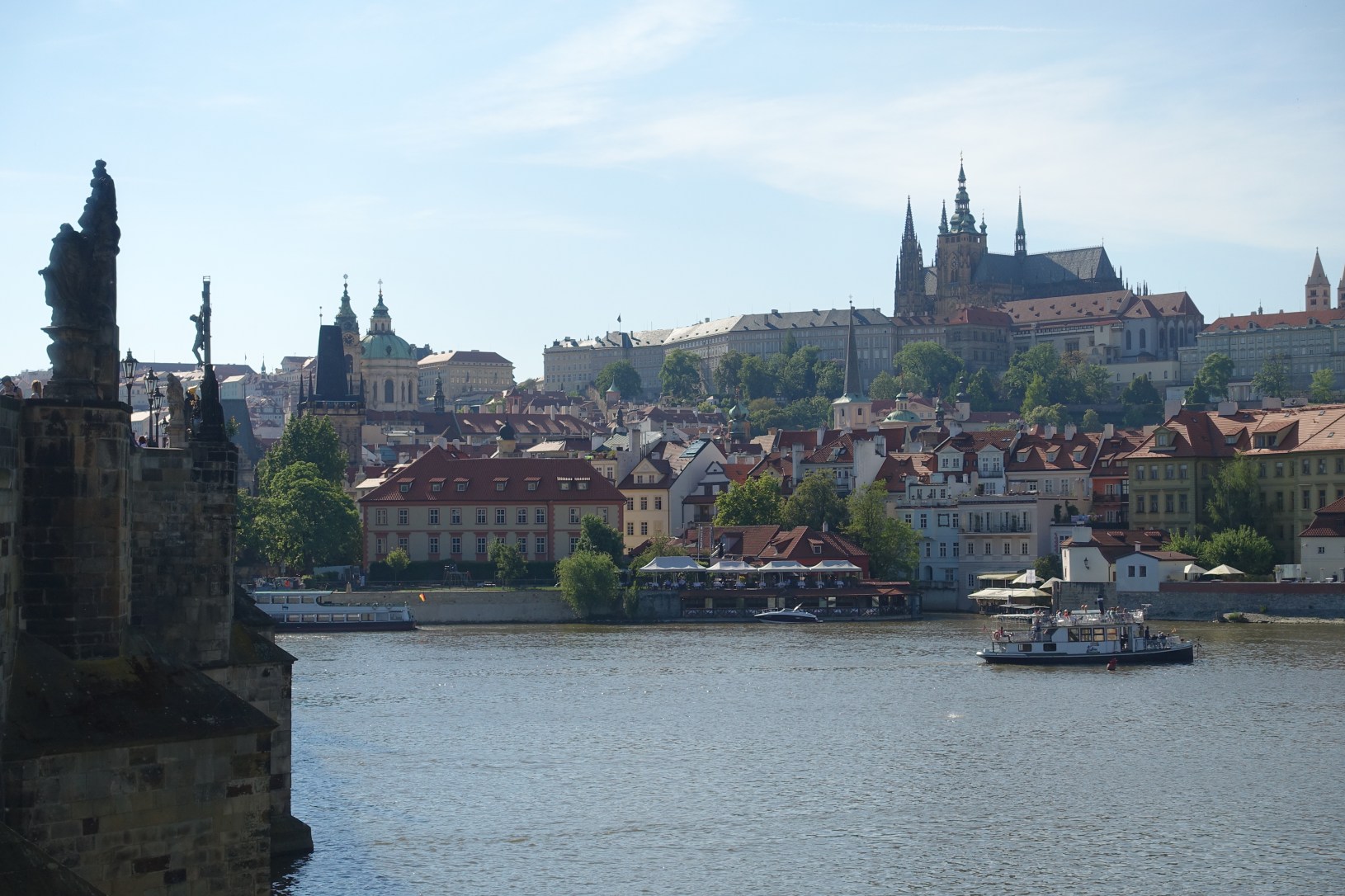
Wait, I neglected to include an eye-catching image on my blog. This one is of Prague.
Plus some hashtags.  Urrgh! Amateur mistake.

#social #tips #myway #Prague

DSC03139.JPG

Hello, and thanks for all the fish

IMG_20160530_194700 (2).jpg

Hello friends,

My first blog post.  They say the first is always the hardest. ‘They’ seems to know what they are talking about.

My name is Marco Leoncelli and I would like to introduce myself to you.  Which is a slightly daunting prospect for someone who does not typically look for public attention. Anyway….IMG_20160506_090130.jpg

Other than the 2.5 years spent living in the UK and France, I have lived my life in Australia.  So, I have been fortunate to reside in a country where air and water are clean and crime rates (especially gun-related crime), relatively low.  Yes, there is a price to pay for these positives – we are an incredibly over-regulated people (big-time nanny state) and the cost of living has become increasingly challenging over the last 10 years. Costs up – wages stagnant.

However, Melbourne coffee is some of the finest you will find anywhere in the World.  I suspect that may be the real reason Melbourne is consistently ranked amongst the top most livable cities in the World.

I am of Italian decent which means an appreciation for great food, though I am not at all a foodie. Simple, quality ingredients prepared by Mum or Nonna (R.I.P) smash anything I could find in a Michelin star restaurant.  Homemade spag Bol, lasagne and especially cappelletti in brodo (consult the book of Google). O-M-G.

Being a good Italian boy, I cherish family and friendship and have been spoiled throughout life by being surrounded by countless great examples of each.  When I need a hand, I always have someone to call upon.  In return, I try to ensure I return the favour whenever my help is needed.

That is how it works in My World – good karma.

Being Italian also means having a passion for objects (ideally red) which have wheels attached to them.

Cycling has always been a part of my life, with a bias towards mountain biking.  My 1991 Gary Fisher Supercaliber is still in serviceable condition, though rarely used as I upgraded to a super mack-daddy, dual-suspension, disk braked, carbon framed yeah baby ride 4 years ago.  I have no regrets.

Obviously, a man is not a man until he owns more bikes that he needs.  So, I purchased a cyclocross bike not long after joining IBM in 2015.  When the motivation is there, I use this for the 27km commute to the office, giving me that ‘superior to my fellow man’ feeling that cyclists love.

However, I feel safer riding off-road where there are fewer highly considerate Australian motorists shouting words of encouragement such as “Gid awf da road ya farkin cyclist c…”.

When motivation fails me, (which is all too often), I am carried to town in one of my other passions.  An Alfa Romeo (Italian. Remember?).

As an impressionable 8-year-old, my Godparent’s Son would take me for the occasional ‘spirited’ drive on local, twisty roads in his classic Alfa.  Overdosing on the glorious sounds and perfume of that wonderful little engine, left me with a lifelong addiction to the sumptuous creations which carry the cross and serpent logo.  I have no regrets.

My pride and joy is a burgundy 1971 Giulia 1750 GTV (Gran Turismo Veloce).  It is in pretty good nick.  We have travelled throughout much of Victoria together and enjoyed the thrills of amateur motor racing, collecting a few trophies along
the way.

Alfa 1750 GTV.jpg

Alfas make great race cars, due to factory engineered qualities – advanced technology and safety features, sporty handling and the ability to become lighter over time (a rusty Alfa joke).

If you like cars and have never driven one of these beauties, find one and have a go.  They really are great fun and offer a unique experience.

My other Alfa is a daily driver.  A red (yay!) 159 3.2l V6 Ti.  It is also a beautiful thing. A practical car which loves fuel more than Australians love beer.

There are other passions in my life but I will write about these some other time, or this post risks becoming rapidly boring – assuming it is not so already.
Hang with me a little longer if you can.

Professionally, I have been in technology sales for just shy of 20 years. Prior to that, I enjoyed time as a photocopier technician and occasional cocktail bartender (I still mix a mean cocktail).

If you would like to know more about where my professional journey has taken me, please visit my LinkedIn profile here.

Right now, I am thoroughly enjoying my time with IBM, where I am fortunate to work with very, very talented people.  Without question, many of the industry’s finest minds.

I look after a number of clients across banking, insurance, resources and utilities, throughout Australia and New Zealand.  I strive to make their existence more efficient, innovative, profitable and pleasurable.

Throughout my career, I have been extremely fortunate.  Earning a decent living, discovering lifelong friendships and helping clients and colleagues.  I like to help people.

Working with many great (and not so great) clients, managers and colleagues taught me amazing skills and life-lessons.  They helped me become better at what I do.  And I continue to learn every single day – a true gift.

My professional education has been varied, plentiful and far more effective than any government provided foundation (Australia’s education system is not at all like Finland’s – no offence).

Speaking of which; I was very fortunate recently, to take part in a one-day course on advanced social media skills, delivered by Andrea Edwards – The Digital Conversationalist

Thank you, IBM for arranging this.  Really. Thank you!

Andrea also provided some one-on-one coaching and asked me about myself –values, interests and passions.  We then discussed what Marco ‘knows and believes’, which may be of interest and benefit to others and who those ‘others’ may be?

The time spent with Andrea gave me the confidence and inspiration to have a crack.  BTW, the above is not a paid endorsement.  It is a personal endorsement.

So I said, “What could possibly go wrong?”
Well. I may be crap, but who knows?

As I continue to post my thoughts in the future, perhaps someone might learn a little about how to become a better professional, land that job, differentiate themselves, ensure loads of people turn up to your funeral, bikes, cars, wristwatches or how not to be a crap person.

Let’s find out.

So here we are.  Post #1.

Who wants a margarita?  Cheers!

IMG_20161005_123232.jpg

Until next time. Thanks for all the fish.

Marco.